

This morning, I saw a young man in a ditch.
Every mother’s worst nightmare—her child stranded somewhere, helpless and alone.
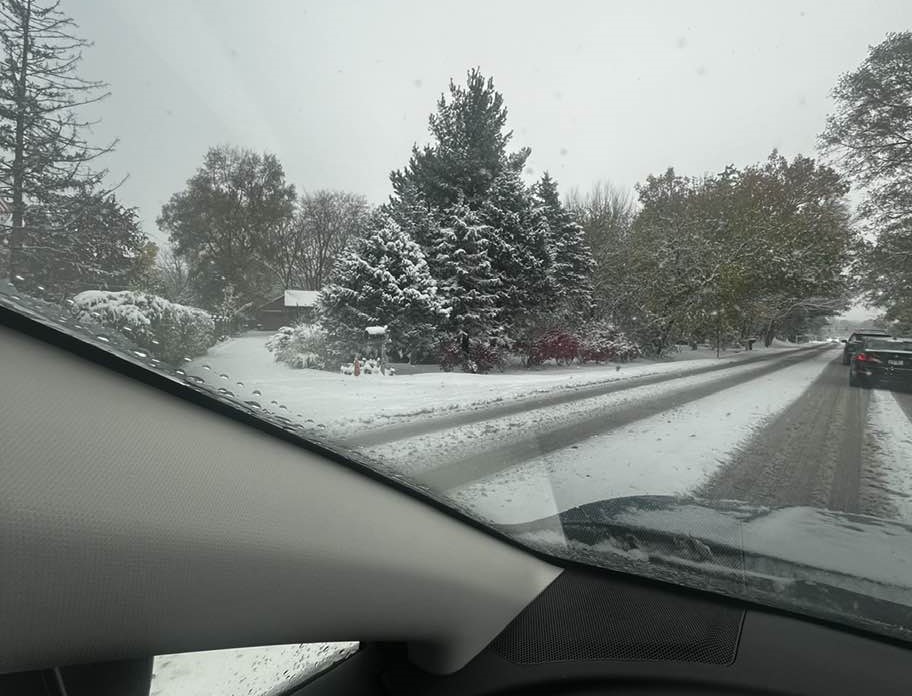
It was a horrible January morning. The ground was being swallowed by wet, heavy snow that quickly turned to ice. Wind and snow blurred the road, and traffic stretched for miles, barely moving. At some point, I assumed there must have been a serious accident ahead.
Eventually, I reached a cluster of police cars. Rolling my eyes, thinking, of course they’re the ones causing the traffic, I glanced to my right.
That’s when I saw him.
A young man stood beside his car, stuck in a ditch. He clutched his phone and turned his face away from the road, embarrassed. Nothing appeared broken—except maybe his pride.
“Oh,” I thought, my irritation dissolving instantly. Every mother’s worst nightmare.
I smiled as I thought of my own sons. Every time they’re out and don’t reply to my texts right away, my mind races. I always say the same thing to them:
Oh my God, what took you so long to reply? I imagined the worst. In my mind, I saw you stranded in a ditch somewhere.
And then—just like that—another thought followed.
It took me back to Bosnia. To the early 1990s. To a woman named Hatidža.
Hatidža and her husband had two sons. On July 11, 1995, Bosnian Serb forces led by Ratko Mladić took over their town. Hatidža and her family were among the thousands affected.
As her husband and sons joined the long line of people fleeing through woods and mountains toward the nearest safe area in Tuzla, Hatidža was separated from them.
Recalling that moment, she spoke of her youngest son clinging to her, begging her to let him go.
“Mother, please let me go with Dad and Azmir. I beg of you.”
His hands wrapped around her—an image that has haunted her ever since.
Hatidža decided to go to the area that was supposedly protected by the UN, in a neighboring town.
Nearly a year after the war ended, in 1996, she received a phone call. Her youngest son, Almir, had been found in a mass grave. His remains were mostly complete—the only ones that were.
In 1998, she learned the fate of her husband and her other son.
Her husband’s remains consisted of only a few bones.
Azmir’s—just two leg bones.
Because bodies had been moved from primary to secondary and tertiary mass graves using heavy machinery, their remains were scattered across kilometers, often found in different locations, incomplete.
Hatidža waited nearly twelve years, hoping more would be found.
In 2010, she laid her husband and both sons to rest at the Potočari Memorial Complex.
The Bosnian Serb army had not only taken her husband and sons, but also her brothers, their sons, her cousins, and their children.
The suffering was immeasurable.
And yet—she returned.
In 2003, Hatidža went back to her town, fighting to reclaim her home from a Serb family who had claimed it as “spoils of war.” For her, it wasn’t just a house. It was where her children had walked. Where her life had been built.
In her yard, three trees still stand—trees her youngest son planted when he was small. He was little then, she would think. The trees are big now…
And that, my friend, is how my mind works. One ordinary moment can open the door to memory.
Sitting in traffic this morning, I couldn’t help but cry—for Hatidža, and for her sons. What a nightmare. Pure hell.
Then my thoughts drifted to today’s wars. To Ukrainian mothers and their sons. To Palestinian mothers. Iranian mothers. Mothers everywhere, holding their breath, imagining the worst.
I had to snap myself out of it. Out of memory. Out of grief.
I remembered music.
Music has a way of pulling me back, of calming the chaos. After I texted both of my sons and received their replies, I finally relaxed. I put my music in my ears and turned it up, drowning out the noise—the bad men, the wars, the cruelty.
Thank God for this country. For freedom.
Thank God that young man in the ditch this morning was unharmed and safe. Nothing was broken except his ego. He’ll learn. One day, this will be a funny memory he tells the people he loves.
I hope everyone is safe today.
All the mothers of the world—and their children.
With all my love,
Sanela
My story, Remember Me, is available in Audio.
“Readers will discover that Jurich writes with the credibility and authenticity of a person who witnessed and experienced what took place in the Balkan countries during the 1990s.” –Gregory S. Lamb, Author of The People in Between
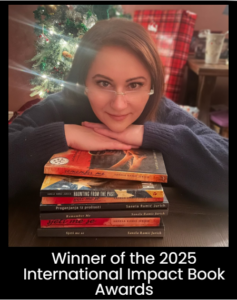
Author Sanela Ramic Jurich